
American Goldfinch: A Small Yellow Bird With a Big Surprise
The American Goldfinch is one of the easiest backyard birds to fall in love with. In summer the male glows bright lemon yellow, like a tiny piece of sunshine with wings.
Then winter comes, and the same bird seems to vanish. The yellow is gone, replaced by soft olive and brown. This guide shows you how to spot a goldfinch in every season, what to feed it, and why it nests later than almost any other songbird.
Goldfinches are social birds, and they rarely travel alone. Small flocks drift over fields and gardens, calling to each other as they fly. Once you learn their habits, you will start seeing them everywhere.
How to Identify a Summer Male
A breeding male is hard to miss. His body is bright lemon yellow, and he wears a neat black cap on the top of his head. His wings are black too, with clear white marks that flash when he flies.
Look at the tail and you will see more black, edged with white. His beak is short and thick, shaped like a tiny cone, and it is perfect for cracking seeds. In summer the beak looks pinkish orange, and it turns darker in winter.
Goldfinches also have a bouncy way of flying. They rise and dip in soft waves across the sky, and they often call as they go. If a yellow bird bounces over your garden and sings on the wing, you have found a goldfinch.
They are small birds, smaller than a house sparrow. A goldfinch is slim, with short wings and a lively, restless manner. Even at a distance, that mix of tiny size and bright color gives the male away.
The Big Winter Change
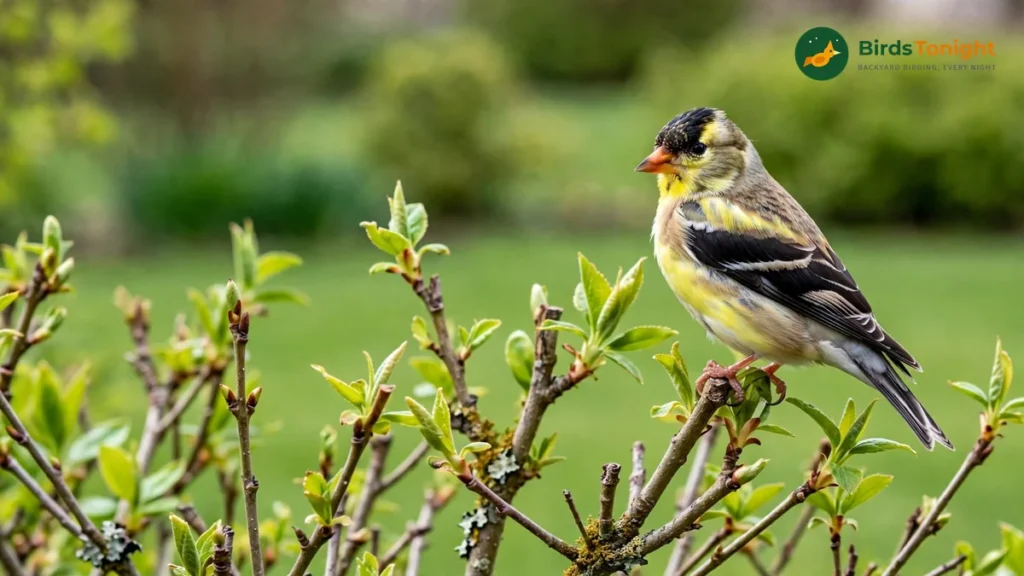
In fall, the goldfinch does something surprising. It sheds its bright feathers and grows a plain new coat of soft olive, gray brown, and dull yellow. The glowing summer bird and the quiet winter bird are the same species, and often the very same bird.
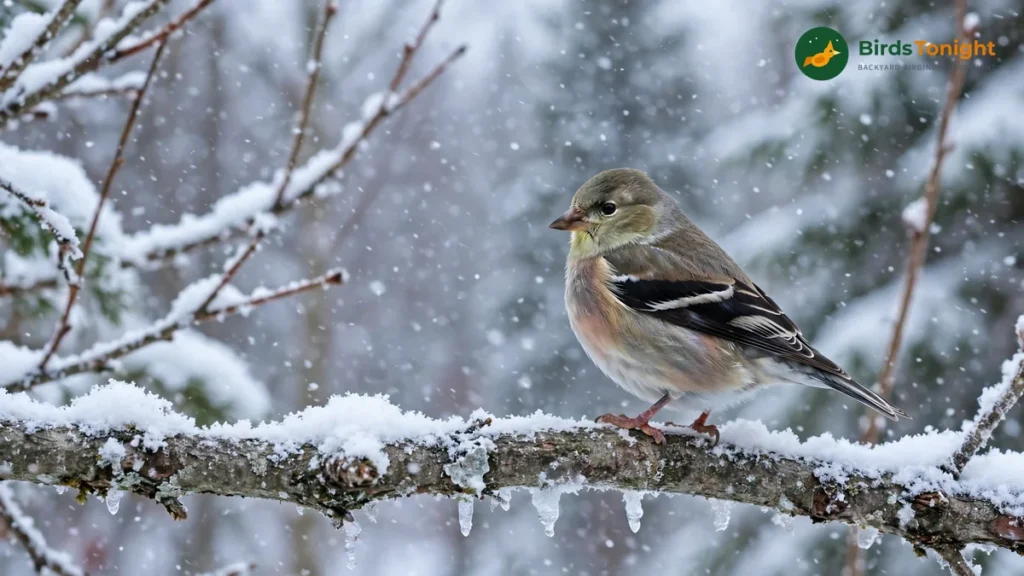
Most songbirds molt only once a year, but goldfinches molt twice. In spring they grow fresh body feathers, and that is when the yellow comes back. In fall they replace all of their feathers, and that second full change is rare among songbirds.
The dull winter colors are not a problem for the bird. They work like camouflage. Plain feathers help a small seed eating bird blend into dry grass and bare branches until spring days grow longer again.
The change does not happen overnight. In early spring a male can look patchy, with yellow and olive mixed together. Give him a few weeks, and the full summer suit is back.
Female or Winter Male? How to Tell Them Apart
In summer the female is a softer, quieter version of the male. She is dull yellow olive on top and pale below, and she has no black cap. Her wings are dark brown rather than deep black, and the white marks are smaller.
Winter is when the two sexes look most alike, because both turn olive and gray brown. The trick is to check the wings. A winter male keeps darker, almost black wings with bold white marks, while the female has browner wings that blend in more.
Size and shape stay the same all year, so use those clues too. Both sexes are small, slim finches with a short cone shaped beak and a short notched tail. If the wings look truly black in the middle of winter, you are most likely looking at a male.
What American Goldfinches Eat
Goldfinches are strict seed eaters, among the most vegetarian of all birds. They eat almost no insects, even in the middle of summer. Nearly everything on their menu is a seed.
At feeders, their top foods are nyjer seed and fine sunflower chips. Nyjer is a tiny black seed, and goldfinches love it more than almost anything else. Sunflower chips are sunflower hearts broken into small pieces, easy for a small beak to handle.
In the wild they feed on the seeds of thistles, coneflowers, asters, and dandelions. This is why gardeners who love goldfinches leave their flower heads standing in fall. A dry coneflower left in your garden works like a free bird feeder all winter long.
Watching them feed on plants is half the fun. A goldfinch is a tiny acrobat, happy to hang upside down on a swaying stem. It pulls seeds out one by one while the plant bends under its weight.

The Best Feeders for Goldfinches
A tube feeder is the classic choice for goldfinches. Pick one with small ports and short perches, made for tiny seeds. Goldfinches are light and nimble, so they stay calm on feeders that sway a little in the wind.

Mesh sock feeders are the other favorite. A sock feeder is a soft net bag filled with nyjer, and the birds cling to the mesh and pull seeds through the holes. Socks are cheap and easy to hang, and they are often busy with birds within days.
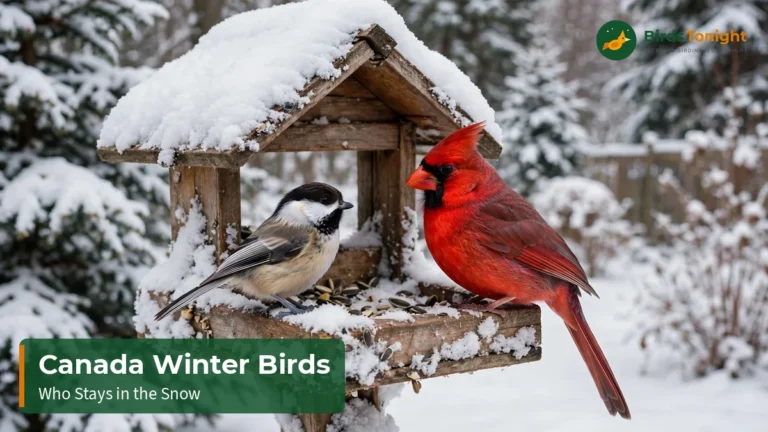
Goldfinches can also feed upside down, which many bigger birds cannot do. Some feeders are built so a bird must hang below the port to eat, and goldfinches handle this with ease. They often share a busy feeder area with other small finches, while a Northern Cardinal picks up fallen seeds below.
Keep the seed dry and fresh, because goldfinches turn away from stale nyjer. Replace a sock feeder when the mesh gets clogged or dirty. Clean your feeders every few weeks so the birds stay healthy.
Where you hang the feeder matters too. A spot near a shrub or small tree gives the birds a safe place to rest between visits. Goldfinches are shy at first, but a quiet corner of the yard wins their trust fast.
Late Nesters: Babies in Mid Summer
Most songbirds nest in spring, but the goldfinch waits. It starts nesting in mid to late summer, later than almost any other backyard bird. The reason is simple: it has to wait until its building materials are ready.

The female builds a tight, neat cup in a shrub or a small tree. She lines it with the soft white fluff of thistle plants, often called thistledown. Thistles only release that fluff in summer, so the whole nesting season waits for the flowers.
The finished nest is woven so well that it can hold water for a short time. The female sits on a small clutch of pale blue eggs while the male brings her seeds. Even the babies are raised mostly on seeds, softened and fed by both parents.
The nest usually sits in the fork of a shrub or a small tree, well hidden by leaves. From below, you would walk right past it. Only the soft calls of the parents give the spot away.
Where You Can See Them All Year
American Goldfinches live across most of the United States and into southern Canada. Many of them stay in the same area all year. You may simply notice them more in summer, when the males shine bright yellow.
Birds from the far north move south in winter, and they join the birds that already live there. Winter flocks wander from field to field, always looking for seeds. Weedy fields, quiet roadsides, and gardens full of seed heads are all good places to look.

Open country suits them best. Look along field edges, river banks, and the sunny edges of orchards, where seed rich plants grow tall. If thistles grow there, goldfinches are rarely far away.
The goldfinch is loved so much that Iowa, New Jersey, and Washington all chose it as their state bird. If you keep nyjer out and leave your flower heads standing, there is a good chance goldfinches will find your yard in any season.
Quick Questions
Why did the yellow bird at my feeder turn dull?
It did not get sick, and it is not a different bird. In fall, goldfinches molt into plain olive and gray brown winter feathers. The bright yellow returns with the spring molt.
What is the best food to attract goldfinches?
Fresh nyjer seed is the top choice, with fine sunflower chips a close second. Offer them in a tube feeder or a mesh sock feeder. Keep the seed dry, because goldfinches ignore stale nyjer.
Do American Goldfinches migrate?
Partly. Birds that breed far north move south for the winter, while many others stay near home all year. In winter they travel in loose flocks and can turn up anywhere seeds are plentiful.
When do goldfinches have babies?
Much later than most birds, in mid to late summer. They wait until thistles release their soft down for the nest lining. By the time the babies hatch, summer seeds are everywhere.
The American Goldfinch rewards a little patience. Feed it well and watch it change with the seasons, and it will keep surprising you. A bird that is sunshine in July and olive in January is never boring for long.