Great Backyard Bird Count 2027: How to Join In
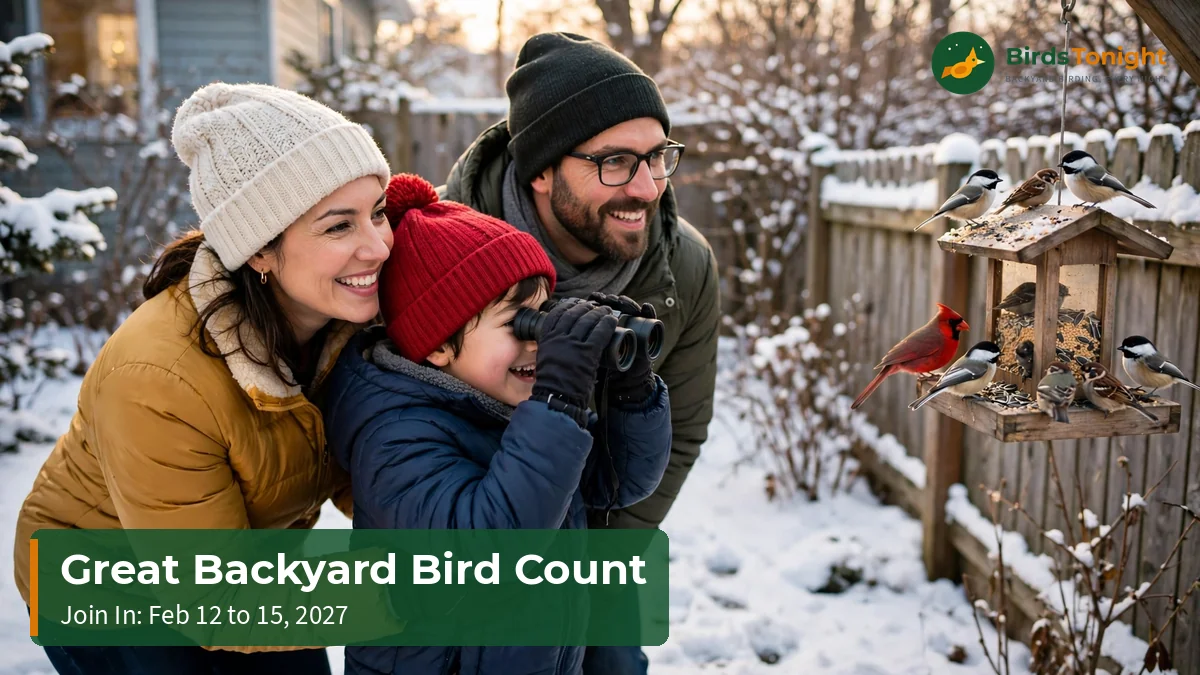
Every February, people all over the world step outside for a few minutes and count the birds they see. This event is the Great Backyard Bird Count, and in 2027 it runs from Friday, February 12 to Monday, February 15.
You do not need to be an expert, and you do not need special gear. You need a place to watch, at least 15 minutes, and a free way to send in your list.
This guide walks you through the whole event in plain steps. By the end, you will know when to count, how to count, and how to send your list in.
What the count is and why it matters
The Great Backyard Bird Count is a free community science event that runs for four days each February. It is run by the Cornell Lab of Ornithology, the National Audubon Society, and Birds Canada.
In 2026, more than a million people took part, and the final count reached 1,146,284 participants. They counted in backyards, parks, school grounds, and even on city balconies.

With numbers like that, the count is one of the biggest bird events of the year. It is also one of the easiest science projects anyone can join.
You can count on your own, with your family, or with a school or scout group. Every list counts the same, whether it holds five birds or fifty.
The event is built for normal people, not only for scientists. Your job is simply to watch with care and report honestly what you see.
Scientists use the results to track bird populations year after year. The count takes place just before spring migration, so it shows where birds are spending the late winter.
One list from one yard may look small on its own. Added to lists from all over the world, it helps scientists see which birds are doing well and which ones need help.
Your list joins a snapshot of bird life across the whole planet. Scientists compare this snapshot with past years to see how birds are coping with change.
The count is also a fine first step into a season of bird watching. When spring migration starts, you can follow the birds as they move north with our guide on how to use BirdCast.
When the count happens in 2027
The 2027 count begins on Friday, February 12 and ends on Monday, February 15. You can join on just one of the days, or count on all four.
Each counting session lasts at least 15 minutes. You can do one session in a day, or rest and then start a fresh session later on.
There is no fixed time of day for your session. Birds are busiest in the morning, though, so an early count often gives you a longer list.
If the weather turns bad on your first day, you still have three more days to try. Many people count on Saturday morning and then again on Monday.
How to take part, step by step
Taking part is simple, and the whole thing fits inside a coffee break. These four steps will get your count done and ready to send.

Get ready the day before if you can. Charge your phone, lay out a notebook and pencil, and top up your feeders so birds are already visiting.
Step 1: Pick your spot. Choose one place, such as a backyard, a park bench, or a chair by a window with a feeder outside. Stay in that one place for the whole session so the count stays fair.
Step 2: Watch for at least 15 minutes. Settle in and watch for 15 minutes or longer if you like. Fifteen minutes is the minimum, and it is enough for a full count.
Step 3: Write down every bird you can name. Keep a simple list of each kind of bird you see or hear and can identify. A notebook and pencil work well for this.
Step 4: Record the biggest group at one time. For each kind of bird, your number is the most you saw at a single moment. If three chickadees visit, then leave, then two come back, your number for chickadees is three, not five.
When the time is up, look over your list once. Check that each number shows the most you saw at one time, and then you are done counting.
How to send in your list
Send your list in on the same day if you can, while the count is fresh in your mind. The official home of the event is birdcount.org, where you can find the official rules and links.

Beginners often find the free Merlin Bird ID app the easiest way to report. You tell the app where you counted, add the birds you saw, and it sends the list for you.
If you already use eBird, you can send your count as a normal eBird checklist instead. Merlin and eBird are both free, and both send your birds to the same scientists.
It helps to set up your free account a day or two early. Then, when your session ends, sending the list takes only a minute.
If you counted with paper notes, type them into the app while they are still fresh. Small details, like the time you started, are easy to forget by evening.
Counting rules made simple
The main rule is to count the birds you see at one time, not added up over the whole session. This stops one busy bird from being counted again and again as it comes and goes.
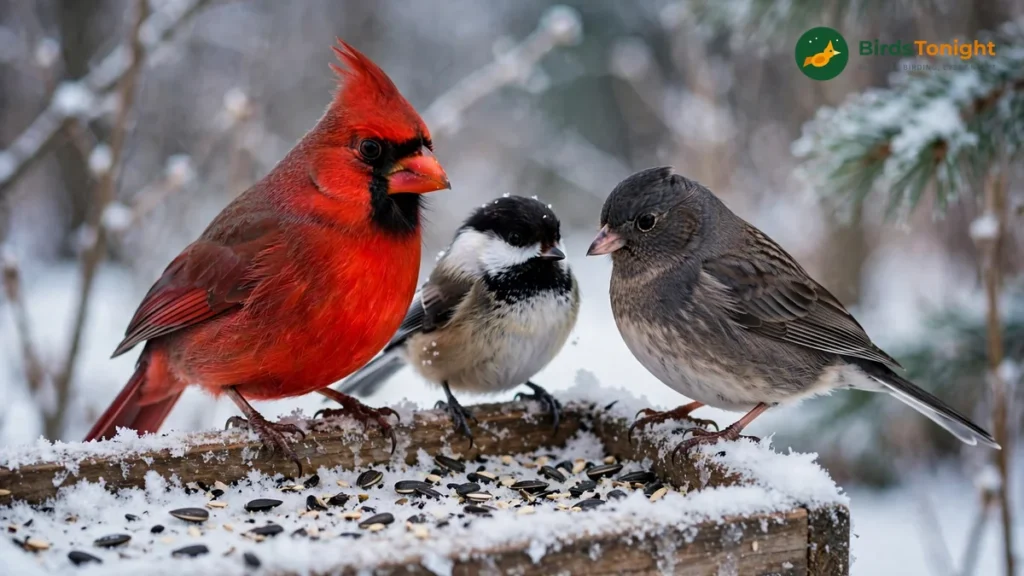
A bird that flies over your spot counts too, as long as you can name it. A bird you glimpse for a second and cannot name stays off the list.
Birds you hear but do not see can count if you are sure of the sound. If the sound is new to you, leave it out this time and learn it for next year.
It is fine to leave out a bird you are not sure about. A short list you trust is worth more to scientists than a long list full of guesses.
Start a new list for each new session and each new place. That way, every list shows one place and one block of time.
Tips for a better count
Count in the morning if you can manage it. Birds feed hard in the first hours of the day, and your list will grow faster.
If you have feeders, fill them a few days before the count begins. Birds need time to find fresh food and settle into a routine.
Bad weather does not have to stop you. Counting from a warm kitchen window is allowed, and many people do exactly that.
Sit still and stay quiet while you count. Birds come much closer when you pick one spot and let them forget you are there.
A pair of binoculars helps, but you do not need them. Most feeder birds are close enough to name with your eyes alone.
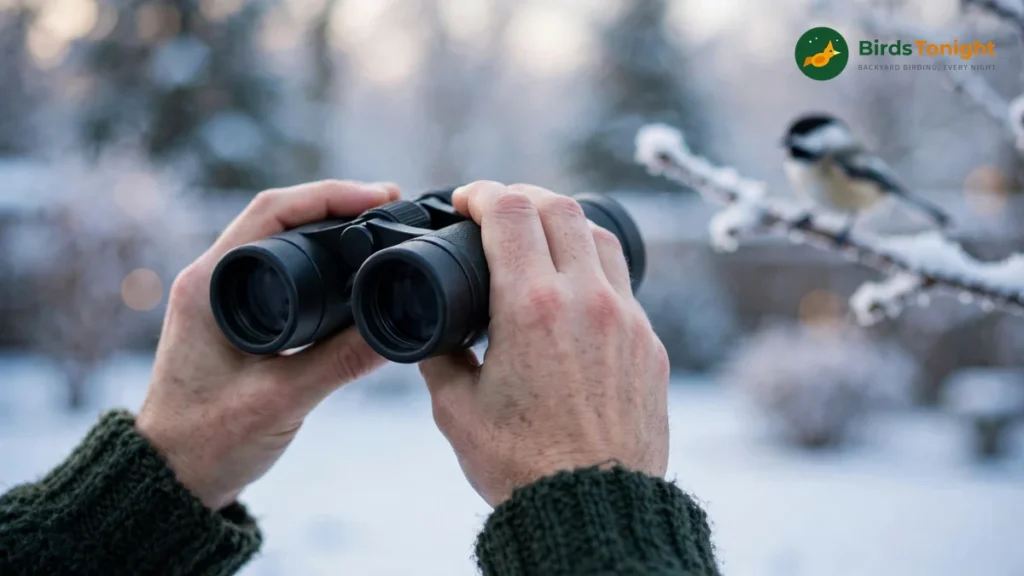
Dress warmly if you count outside, even for just 15 minutes. Cold hands and feet make people quit early, and the best bird may show up at minute fourteen.
Keep the yard calm on the morning of your count. Pets stay indoors during your session, so the birds feel safe and keep coming.
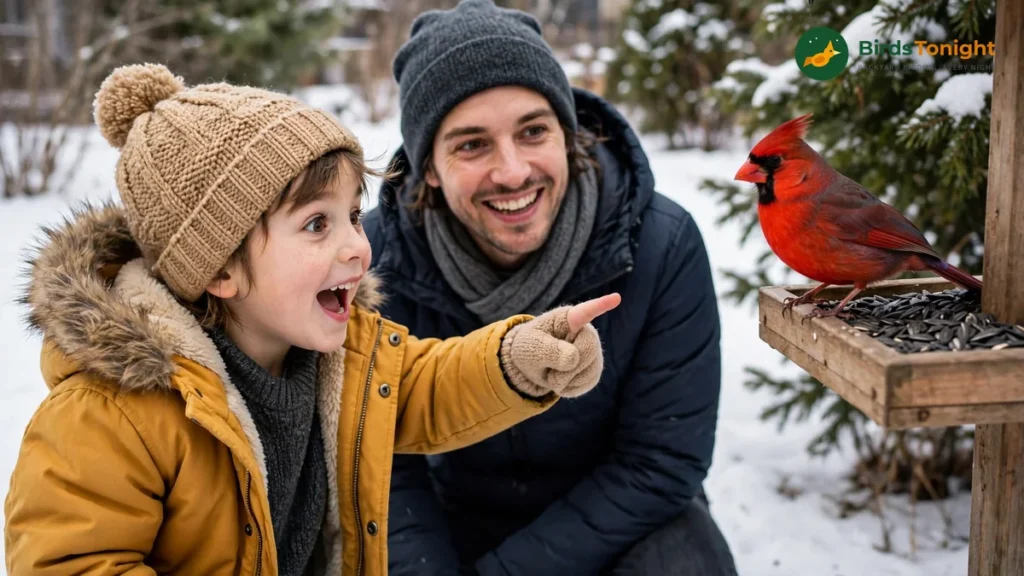
Bring the whole family if you like. Extra eyes spot extra birds, and kids are often the first to see something new.
Questions people ask
Can children and beginners join in?
Yes, children and beginners are welcome, and this count is a great first bird event. Kids often spot birds that adults walk right past.
Does it cost anything to take part?
No, taking part costs nothing at all. The Merlin Bird ID app and eBird are free to use as well.
Do I have to count in my own backyard?
No, the name is only a name. You can count at a park, on a nature trail, at a school, or anywhere you can watch birds for 15 minutes.
What if I see a bird I cannot name?
Leave it off your list and keep counting the birds you know. You can also snap a photo and try to name it later with the Merlin app before you send your list.
Your 15 minutes matter
Four days, one short watch, and a list that helps real science. That is all the Great Backyard Bird Count asks of you.
Pick a day between February 12 and 15, 2027, and give your local birds 15 minutes of your time. You may be surprised by how much life is in your yard in the middle of winter.
If this is your first count, welcome to a new winter habit. Many counters come back every year and turn the weekend into a small family tradition. See you out there this February.