Bird Seed Guide: Which Seeds Attract Which Birds
Walk into any garden store and you will find bags of bird seed stacked to the ceiling. The bags all promise happy birds, but the birds in your yard have strong opinions of their own. Pick the wrong seed and it sits untouched for weeks.
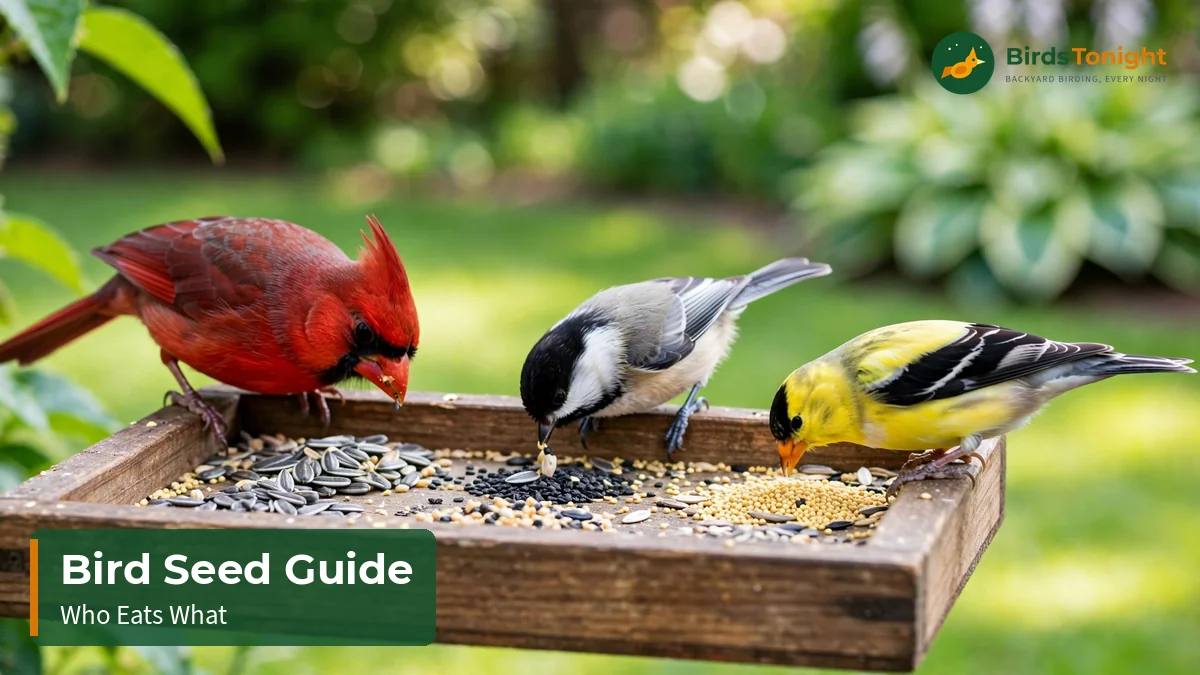
The good news is that birds are not hard to please once you know what each one likes. Every common seed has its fans, and a few seeds please almost everybody. This bird seed guide matches each seed to the birds that love it, so you can fill your feeders with food that gets eaten.
Start with the table below for the quick answer. Then read the seed by seed notes to learn why each bird picks its favorite.
The seed by bird matrix
| Seed | Birds it attracts | Notes |
|---|---|---|
| Black-oil sunflower | Cardinals, chickadees, titmice, nuthatches, finches, woodpeckers | Thin shell, easy for small bills to crack, rich in oil and energy |
| Striped sunflower | Jays, cardinals, grosbeaks, woodpeckers | Bigger seed with a thick, hard shell that small birds struggle with |
| Sunflower chips | Chickadees, finches, sparrows, cardinals, doves | Hulled kernels with no shells to clean up, but they spoil fast when wet |
| Nyjer | Goldfinches, house finches, purple finches, siskins, redpolls | Tiny black seed served in a fine mesh feeder, must be fresh |
| White millet | Juncos, sparrows, doves, towhees, quail | A ground feeder favorite, best scattered on soil or a low tray |
| Safflower | Cardinals, chickadees, titmice, house finches, doves | Bitter taste that most squirrels, grackles, and starlings dislike |
| Cracked corn | Jays, doves, blackbirds, sparrows, quail | Cheap and filling, best on the ground and used up fast in wet weather |
| Peanuts | Jays, woodpeckers, nuthatches, titmice, chickadees | High in fat and protein, serve in a mesh feeder or on a tray |
| Suet | Woodpeckers, nuthatches, chickadees, wrens, jays | Rendered fat cakes that give quick energy, a big hit in cold weather |
Black-oil sunflower: the all-round favorite
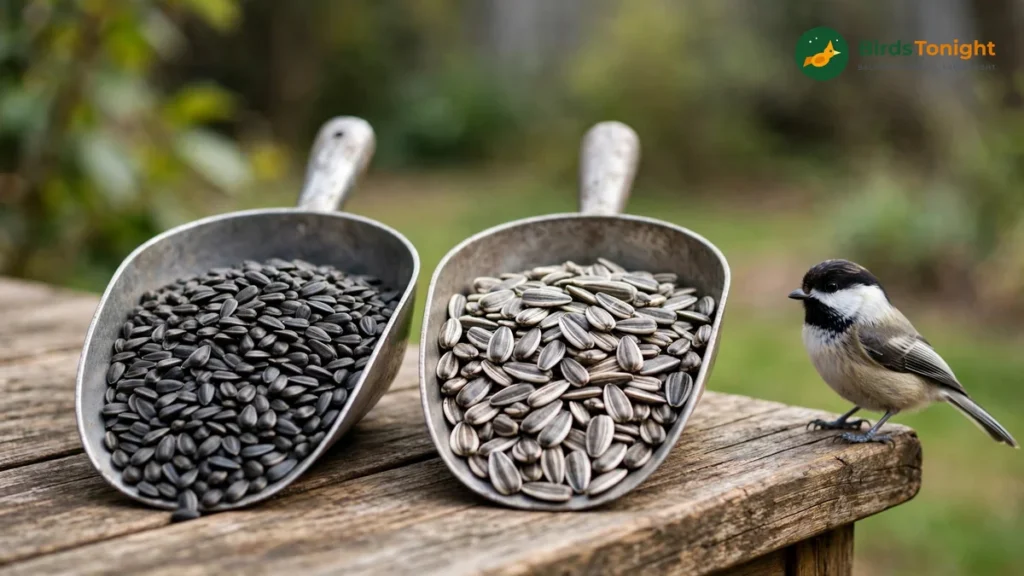
If you could buy only one seed, black-oil sunflower would be the one to pick. Cardinals, chickadees, titmice, nuthatches, finches, and woodpeckers all take it with no fuss. No other single seed draws such a wide mix of birds to one feeder.
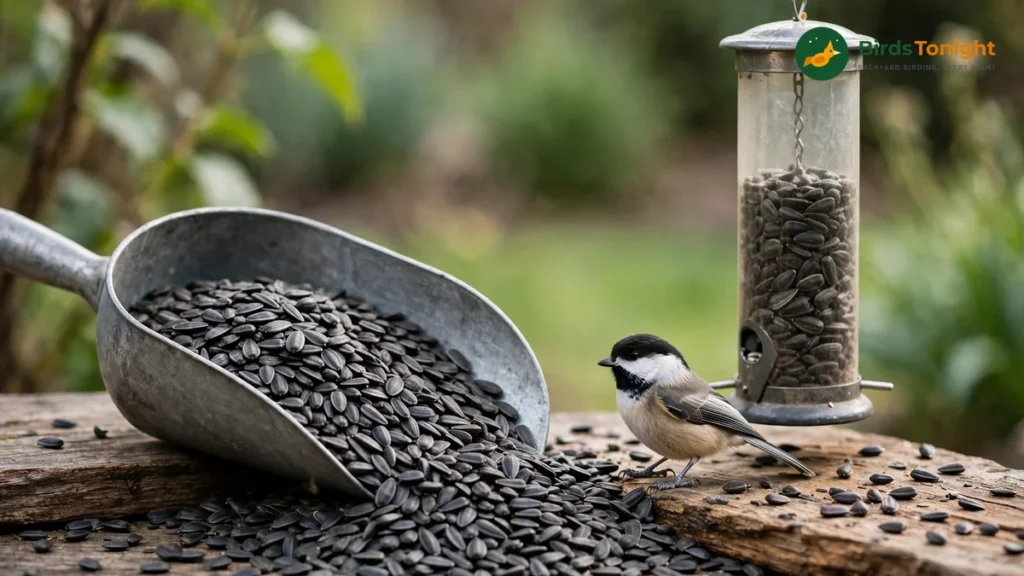
The secret is the shell. Black-oil seeds are small, and their thin black shells crack open with very little work, even for tiny bills. Inside sits a kernel rich in oil, which gives birds plenty of energy for its size.
Striped sunflower is the bigger cousin with grey and white stripes on the shell. Its thick, hard shell suits strong billed birds like jays, cardinals, and grosbeaks. Small birds often leave it behind, so most feeders do better with the black-oil kind.
Sunflower chips are kernels with the shells already removed. Birds love them, and your patio stays free of empty shells. The trade off is that chips spoil fast in rain, so fill a small feeder and top it up often.
Nyjer: the tiny seed for small finches
Nyjer is a tiny black seed that looks almost too small to matter. Goldfinches adore it, and house finches, purple finches, pine siskins, and redpolls crowd in beside them. For many people, a nyjer feeder is the one sure way to bring goldfinches into the yard.

The seed is so fine that it pours straight through a normal feeder. It needs a feeder with tiny holes or a mesh sock that finches cling to while they pull the seeds out.
Freshness makes or breaks nyjer. The seed dries out as it ages, and finches will ignore a feeder full of old seed even when they are hungry. Buy it in small bags, and if your finches suddenly stop visiting, fresh seed is the first thing to try.
White millet: the ground feeder favorite
White millet is a small, round, pale seed that many people overlook. The birds that love it most feed on the ground, not up at hanging feeders. Juncos, sparrows, doves, and towhees search for it first when they land under a feeder.
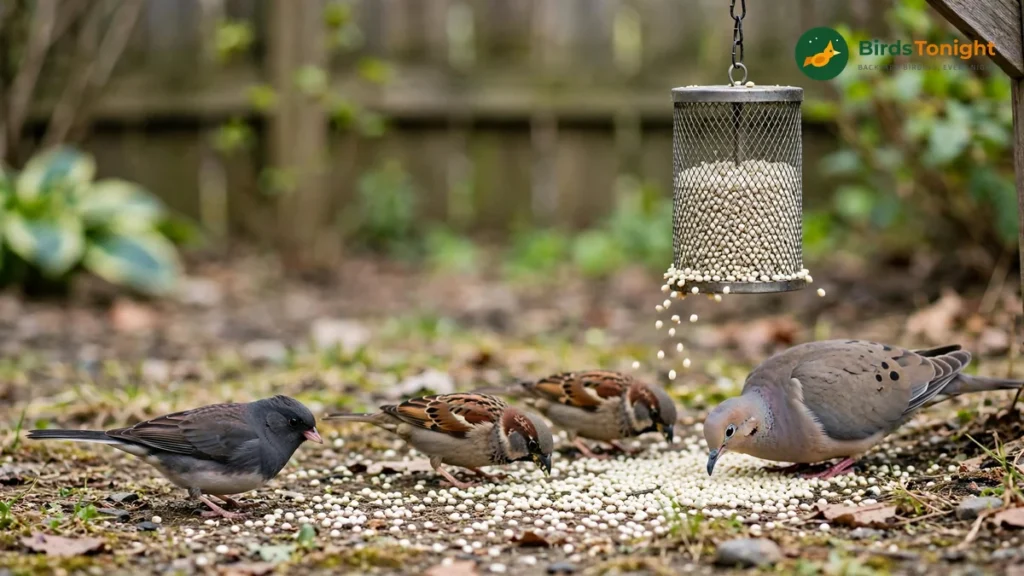
The trick with millet is where you put it. Scatter it on bare soil, on a low tray, or on a flat stone near some shrubs. Birds that feed on the ground feel safer with cover close by, so a spot near a bush works better than the middle of an open lawn.
Winter is when millet really earns its place. Dark-eyed Juncos arrive with the cold and scratch through leaf litter for small seeds, and you can read more in our Dark-eyed Junco guide. A handful of millet on the ground each morning keeps a flock busy for hours.
Safflower: the cardinal seed squirrels skip
Safflower is a white seed with a hard shell and a bitter taste. Northern Cardinals love it and will pick it out of a mix before anything else. Chickadees, titmice, house finches, and doves eat it happily too.

That bitter taste is the reason many people switch to safflower. Most squirrels taste it once and leave it alone, and grackles and starlings usually pass it by as well. A feeder full of safflower can stay a calm place for songbirds while the bully birds go elsewhere.
If your birds are new to safflower, mix it with sunflower at first and raise the share over a week or two. Cardinals tend to approve first, and the rest follow.
Peanuts: a rich treat for strong bills
Peanuts are packed with fat and protein, and the birds that find them act like they have won a prize. Blue Jays carry off whole peanuts in the shell and hammer them open on a branch. Woodpeckers, nuthatches, titmice, and chickadees prefer shelled peanuts or peanut pieces they can grab fast.
Serve peanuts in a mesh feeder, a tray, or a peanut wreath that birds cling to. Never use salted or flavored peanuts, since the salt is bad for birds. Plain raw or roasted peanuts with no salt are the safe choice.
Peanuts soak up water and can grow mold when they sit wet for days. Put out only what your birds finish in a day or two, and clear away any that turn soft or dark.
Cracked corn: cheap food for ground birds
Cracked corn is dried corn broken into small pieces, and it costs less than almost any other bird food. Jays, doves, blackbirds, and sparrows eat it well, and quail and pheasants take it where they live. It is a plain, filling food rather than a rich one.
Corn belongs on the ground or on a low tray, where the birds that like it feed. It draws a crowd, so expect extra blackbirds and squirrels once they learn corn is on the menu.
Wet weather is corn’s weak point, since damp corn spoils fast and can grow mold that harms birds. Scatter small amounts and let the birds clean it up the same day.
Suet: not a seed, but too good to skip
Suet is rendered beef fat pressed into cakes, often with seeds or peanuts mixed in. It is not a seed at all, but no bird seed guide feels complete without it. Woodpeckers cling to suet cages with ease, and nuthatches, chickadees, wrens, and jays visit often.

Fat means fast energy, which is why suet shines in cold weather. Birds burn a lot of fuel just staying warm through a winter night. A suet cake near your seed feeders gives them a rich top up before dark.
Plain suet can melt or turn rancid in summer heat, so use no melt suet in warm months. Hang it in the shade and replace any cake that smells off.
Seeds to avoid in cheap mixes
The cheapest bags of bird seed often hold more filler than food. Milo, wheat, and red millet fill up much of these mixes because they cost very little. Most backyard songbirds kick these seeds aside and keep digging for the good bits.
You can spot the waste under the feeder, where kicked aside seed piles up, sprouts, and draws mice. Much of that cheap bag ends up feeding the soil instead of the birds.
Read the label before you buy any mix. A good mix lists sunflower, white millet, safflower, or peanuts near the top. If milo or wheat leads the list, leave the bag on the shelf and buy single seeds instead.
How to pick seeds for the birds you want
Start with the birds, not the bag. If cardinals are your goal, black-oil sunflower and safflower on a tray feeder will bring them in. If you dream of goldfinches, a mesh feeder of fresh nyjer is the fastest route.
Ground birds need ground food. Juncos, sparrows, and doves rarely climb to hanging feeders, so scatter white millet and a little cracked corn where they feed. A yard that feeds at two heights, up high and down low, hosts far more kinds of birds.
Add one new food at a time and watch for a week, since birds need a few days to trust a new seed. Then drop what nobody eats and double up on what vanishes first.
How to store seed and keep it fresh
Bird seed keeps best in a cool, dry place sealed away from mice. A metal bin with a tight lid is hard to beat, since mice chew through plastic and bags with ease. Keep the bin in a garage or shed, out of rain and strong sun.
Buy only as much seed as your birds will eat in a month or two, since the oils inside go stale over time. Nyjer goes stale fastest of all, so buy it in small bags.
Check stored seed before you fill a feeder. Throw out any seed that smells musty, looks moldy, or has webs and moths in it. Fresh seed in a clean feeder keeps birds healthy and keeps them coming back.
Bird seed FAQ
What is the best all-round bird seed?
Black-oil sunflower is the best single choice for most yards. More kinds of birds eat it than any other seed, and its thin shell suits small and large bills alike.
Why do birds throw seed out of my feeder?
Birds dig through a mix to find the seeds they like and flick the rest aside. Lots of tossed seed usually means the mix holds filler like milo and wheat. Switching to single seeds or a better mix ends most of the mess.
Do I need a special feeder for nyjer?
Yes, nyjer is so tiny that it spills out of normal feeders. Use a tube feeder with very small holes or a mesh sock feeder that finches can cling to. Both keep the seed in and let small finches feed in comfort.
How long can I store bird seed?
Most seed keeps well for a month or two in a cool, dry, sealed bin. Nyjer should be used fastest, within a few weeks of opening if you can. If seed smells musty or shows mold, throw it out and start fresh.