Northern Cardinal: How to Attract, Feed and Identify America’s Brightest Backyard Bird
The northern cardinal is often the first bird many people learn in a US backyard. The male is bright red with a tall crest, and he sings from a shrub top even in deep winter. The female is warm tan with red touches, and the pair stays in the same area all year.
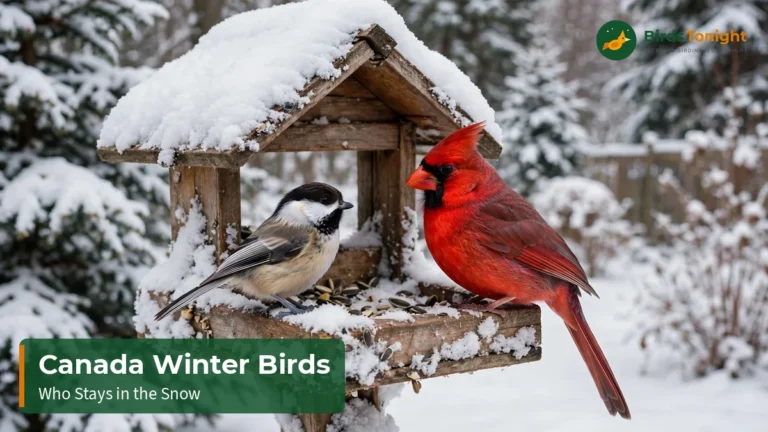
Cardinals do not migrate, so the bird you see in January is often the same one you saw in July. In winter, when most color has left the garden, that red stands out more than at any other time. Few backyard birds are this easy to watch all year.
This guide shows how to identify a cardinal at any age. It also covers food, feeders, nesting, and range, plus mistakes that keep cardinals away.
How to identify a Northern Cardinal
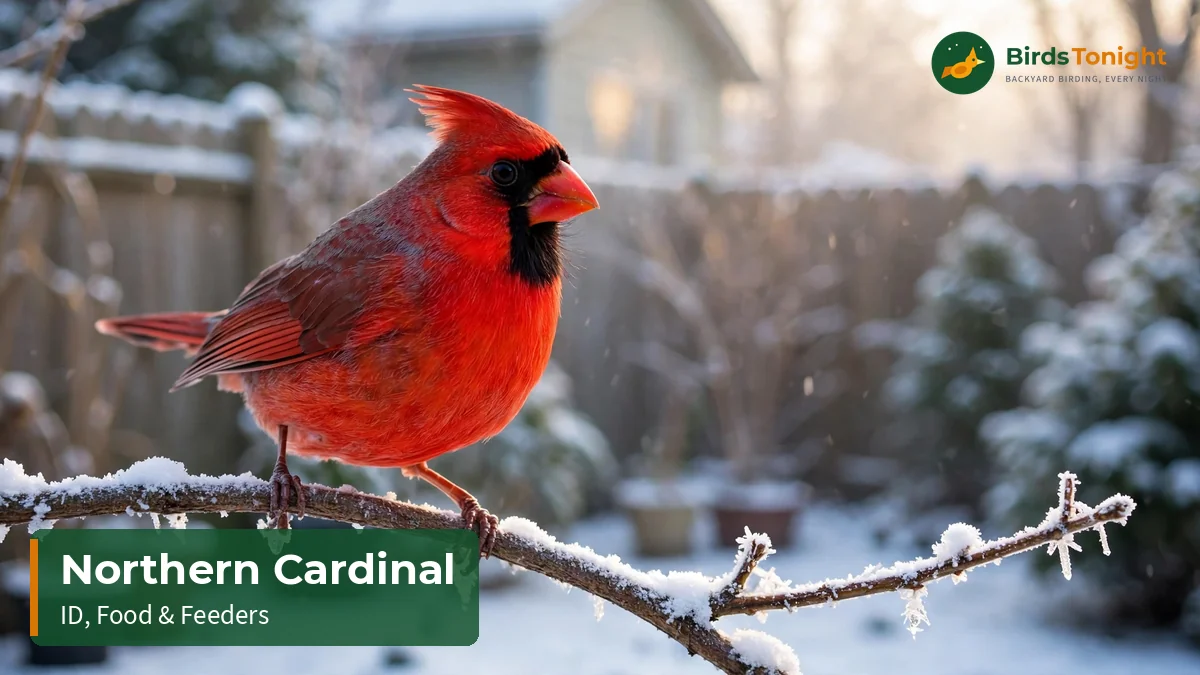
The Northern Cardinal (Cardinalis cardinalis) is a medium sized songbird, 8.2 to 9.3 inches (20.8 to 23.6 cm) long. It has a crest and a large, reddish orange, cone shaped bill. That strong bill is built for cracking hard seeds.
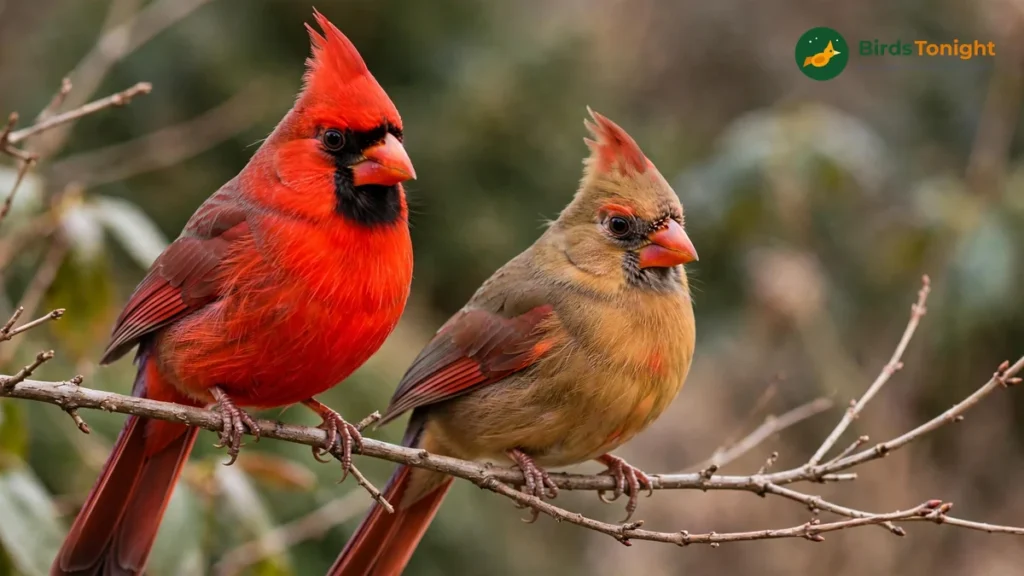
- Male: Bright red all over, with a black mask around the bill. The crest, color, and mask make him hard to confuse with any other bird.
- Female: Warm tan brown, with red on the crest, wings, and tail. Her orange red bill and paler black mask are the best clues.
- Young birds: Brownish grey like the female, but with a dark grey to black bill. The bill turns orange red as the bird grows up.
- Song and calls: A loud, clear whistle like cheer, cheer, cheer or birdy, birdy, birdy. Both sexes sing, and females often sing from the nest, which is rare for North American songbirds. The sharp chip call is often the first sound heard at a feeder.
Cardinals are the state bird of seven states: Illinois, Indiana, Kentucky, North Carolina, Ohio, Virginia, and West Virginia. Learn the crest and the bill, and you will spot cardinals fast.
Where cardinals live
Northern Cardinals are permanent residents across most of their range. They do not migrate or leave for the winter. A cardinal in your yard in December is likely the same bird that was there in July.
Their range covers the eastern and central United States, from southern Maine and Minnesota south to the Texas and Mexico border. It reaches southern Canada, in Ontario, Quebec, New Brunswick, and Nova Scotia. Birds also live through Mexico into Belize and Guatemala, and in parts of the Southwest.
Long ago, cardinals were mostly birds of the southeast. Over the past two hundred years, they have spread north and west. Backyard feeding has helped, since sunflower seed helps them survive cold winters in new places.
In every state, cardinals pick the same kind of place. They like woodland edges, thickets, hedgerows, overgrown fields, marshy tangles, parks, and yards with dense cover. They need open ground to feed on, with thick shrubs close by for safety and nesting.
What a Northern Cardinal eats
A cardinal’s diet is mostly seeds and fruit, with insects added in the warm months. Adults eat up to about 90 percent weed seeds, grains, and fruit. Nestlings eat almost nothing but insects, which give them the protein to grow fast.
Wild foods include sunflower and other seeds, dogwood, wild grape, blackberry, sumac, hackberry, and mulberry. Cardinals also eat grasses and sedges. Insect food includes beetles, crickets, katydids, cicadas, flies, spiders, butterflies, and moths.
Cardinals feed mostly on the ground or in low brush, hopping through low growth. That ground feeding habit is the key to feeding them well at home.
At a feeder, two seeds are clear favorites. Offer those first, before anything fancy.
- Black-oil sunflower seed: The single best food for cardinals. Most other yard birds will eat it too.
- Safflower seed: Cardinals like it, but squirrels and many blackbirds do not. It is the best pick where squirrels raid feeders.
- Cracked corn and millet: Scatter it on the ground or on a platform feeder. It helps most in winter, when birds burn more energy.
- Fruit: Berries from native shrubs help cardinals in season. Good shrubs can do more than any feeder.
Skip mixed seed that is heavy with milo or wheat. Cardinals mostly ignore those seeds, and the mix can draw birds you may not want. Do not offer bread either, since it fills a bird up without feeding it.
Best feeders for a Northern Cardinal
Cardinals are not built like finches. They are fairly large, heavy birds that perch with both feet and need room to sit. Most small tube feeders with tiny perches do not work for them.

Many people see cardinals on the ground under a feeder but never on it. The birds are not being shy. The perch is just too small for them.
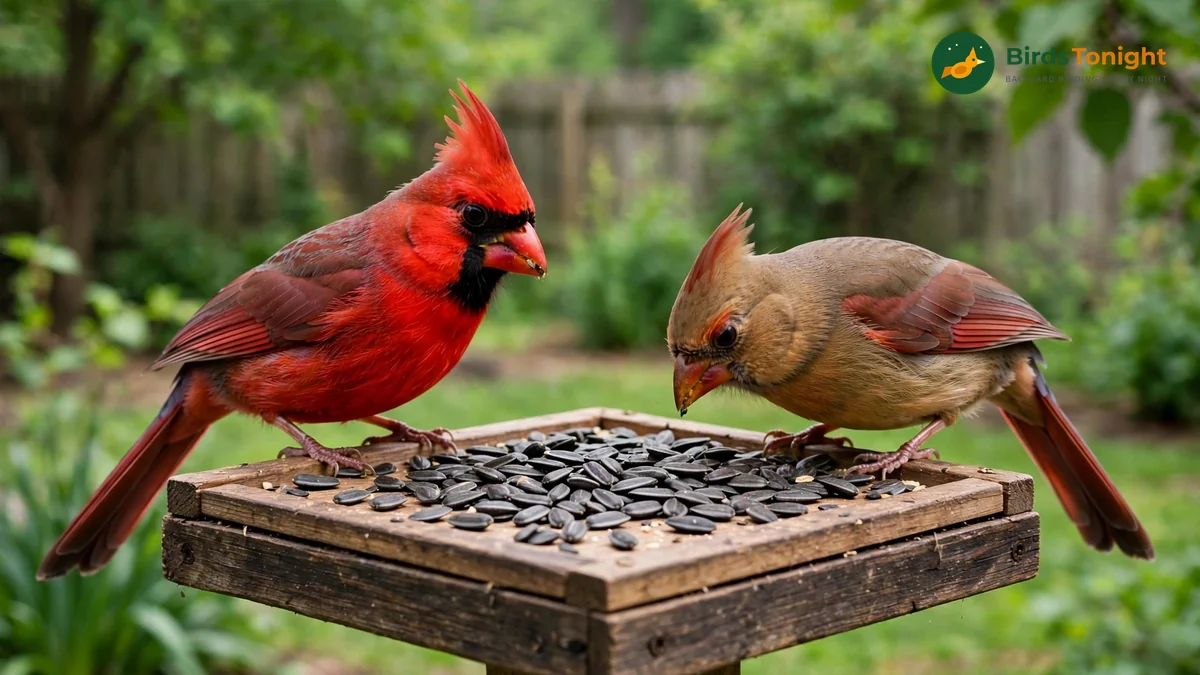
- Hopper feeders: The best all round choice. A wide ledge lets a cardinal sit and crack seeds, and the roof keeps seed dry.
- Platform or tray feeders: A great choice, and even better in winter. Set one low, near cover, and cardinals will use it all day.
- Large tube feeders: Pick one with a tray and long perches. Most standard tubes are too small for a cardinal to stand on.
- Ground feeding: Scatter sunflower and safflower seed under shrubs, or use a low ground tray. This matches how cardinals feed in the wild.
Place feeders within a short flight of dense shrubs or a hedge. Cardinals will not cross a wide open lawn to a feeder with no cover near it, and they need cover when a hawk passes. They feed first at dawn and last at dusk, so keep feeders filled for those hours.
Keep the ground under feeders clean, since old, wet seed is where disease spreads fastest. In winter, a heated birdbath or shallow dish of fresh water can draw cardinals to a yard with seed. Refresh it each day, since liquid water is as valuable as food in freezing weather.
Nesting habits and what not to build
Cardinals nest in dense shrubs, young trees, vines, and tangles. They never nest in a nest box, so do not buy one. The birds will not use it, no matter where you hang it.
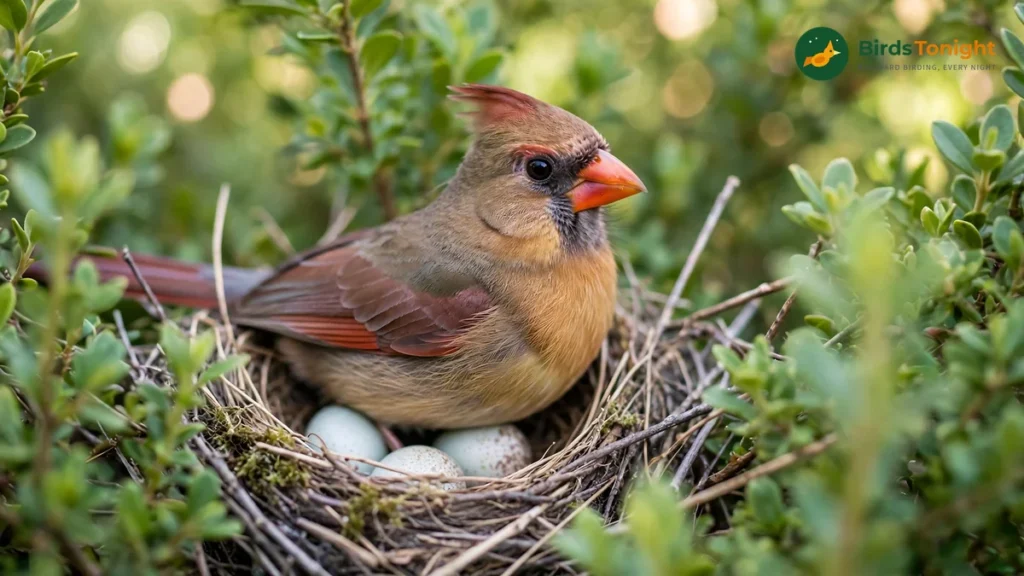
Give a pair cover instead: a native shrub thicket, a hedgerow, or a brush pile at the garden edge. Thick cover gives the pair a safe place to build and hide the nest.
The female builds a cup nest from thin twigs, bark strips, and grasses, lined with finer plant material. The job takes three to nine days. The nest sits in a hidden spot in a dense shrub or low tree, usually 1 to 15 feet above the ground.
She usually lays 3 or 4 eggs and sits on them alone. The male brings her food while she incubates. You can see this courtship feeding at a feeder, as the male passes a seed beak to beak to the female.
Both parents feed the young once they hatch. The young leave the nest after about 12 days. A pair often raises two to four broods a year, from spring into late summer.
If you find a cardinal nest, the best help is distance. Watch from inside, keep cats indoors, and do not trim the shrub while the nest is in use.
Male cardinals defend their ground hard in spring. A male may attack his own reflection in a window for weeks, since he sees a rival bird. He is guarding a nest nearby, and the kind fix is to break up the reflection from outside.
Cardinals through the year
Since cardinals stay in one place, each season shows a new side of the same birds. Watch one pair for a full year and you will learn their habits well.
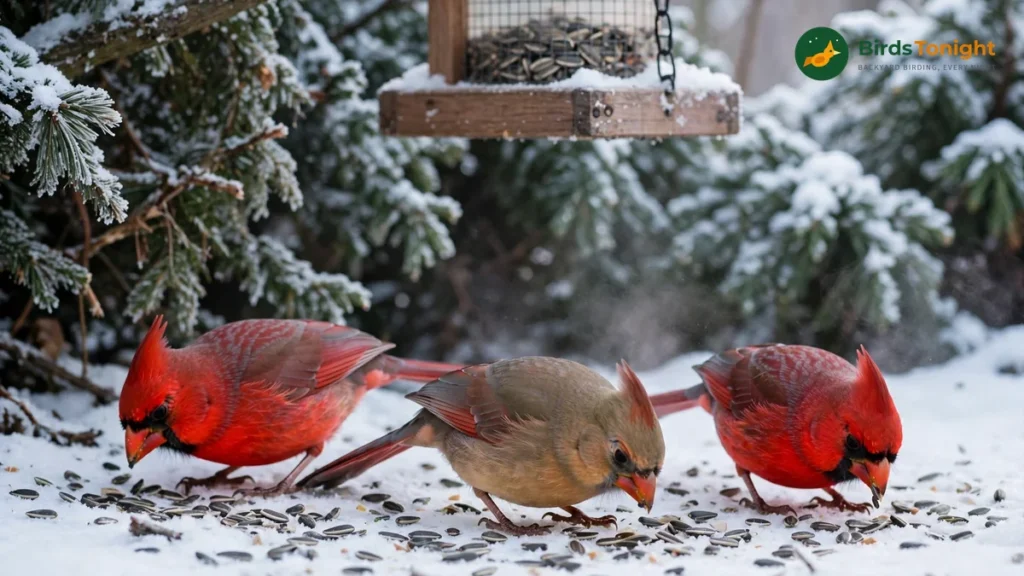
- Winter (December to February): Cardinals show best now, red against snow or bare branches. They feed in loose groups at dawn and dusk, when food and fresh water matter most.
- Spring (March to May): Song peaks, pairs form, and birds defend their ground. Males sing from high perches, females sing from the nest, and the first nests appear.
- Summer (June to August): Adults moult and look scruffy for a few weeks. Young birds with dark bills beg at feeders, and two or three broods are normal.
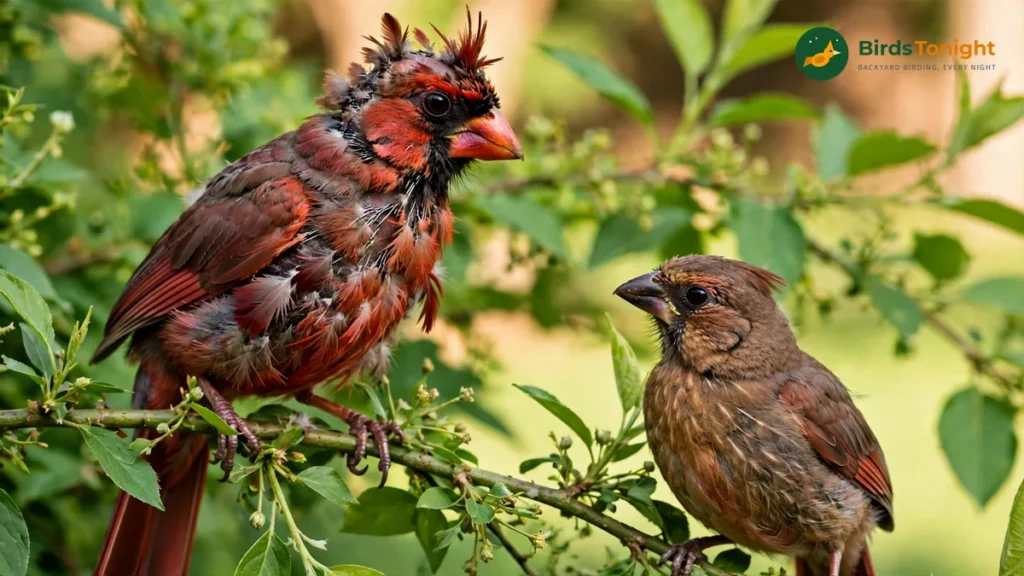
- Autumn (September to November): Family groups break up and young birds move out. Fall is the best time to plant shrubs for next spring’s nests.
Common mistakes
Most yards that fail to hold cardinals make one of five simple mistakes. Each one is easy to fix once you spot it.
- A feeder cardinals cannot stand on is the most common error. Small perches and swinging tubes suit finches, so give cardinals a wide ledge.
- A feeder in the open, far from cover, will stay empty for long stretches. Cardinals need a shrub within a short flight, so move the feeder closer.
- A nest box will not help a cardinal pair at all. Cardinals nest in shrubs, not boxes, so plant cover instead.
- Feeding only in summer misses the point of this bird. Cardinals live here all year, and winter feeding counts most.
- The female is easy to mistake for a different species. She is tan, crested, and orange billed, with a black mask, and she sings.
The bottom line
You do not need rare birds to have a good backyard. A pair of Northern Cardinals gives you song in every month of the year. The same pair adds bright color in the middle of winter.
Feed them black-oil sunflower and safflower seed on a hopper or platform feeder near thick cover. Leave a shrub for nesting and fresh water to drink. Then you can watch courtship, nesting, and young birds from your own window.
Start with cardinals and keep simple notes on what you see. The rest of backyard birding follows from there.
Sources
- Cornell Lab of Ornithology, All About Birds: Northern Cardinal
- National Audubon Society: Northern Cardinal Field Guide
- University of Florida IFAS Extension (2026): The Northern Cardinal: The Neighborhood Show-off
- Wild Birds Unlimited: Attracting Northern Cardinals to Your Backyard
- South Dakota Birds: Northern Cardinal