
Canada Winter Birds: Who Stays, Who Visits, and How to Feed Them
A Canadian winter looks quiet from the window, but the feeder tells a different story. Chickadees bounce in and out all day, jays argue over peanuts, and a cardinal glows red against the snow. The yard stays busy because many birds never leave, and guests from the far north fly down to join them.
This guide meets both groups, the birds that stay all winter and the wild visitors that only show up in some years. It also covers how these small birds survive nights that would freeze a person in minutes. And it shows what to put out so your feeder helps them through the coldest weeks.
The birds that stay all winter
The Black-capped Chickadee is the heart of the winter yard. It weighs about as much as two quarters, yet it stays through the coldest nights in the country. Its cheerful call and bold habits make it the first bird most Canadians learn by name.
The Blue Jay stays too, loud and bright and hard to miss. It hauls away peanuts and sunflower seeds and hides many of them for later. A jay at the feeder often clears the stage for a moment, then the small birds rush back in.
Downy and Hairy Woodpeckers work the trees and the suet cage all winter long. The Downy is small and quick, while the Hairy looks like its bigger copy with a longer bill. Both drum on dead branches and sleep in tree holes at night.
The White-breasted Nuthatch walks headfirst down tree trunks, hunting bugs in the bark. It loves suet and sunflower seeds and often carries one seed off to hide in a crack. Its soft nasal call gives it away before you see it.
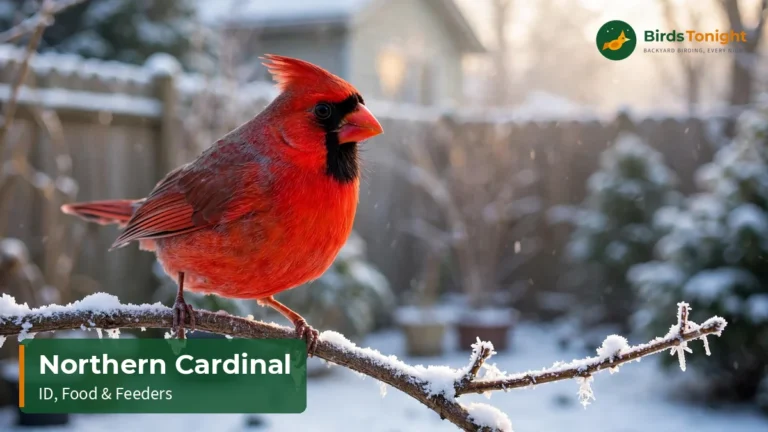
In the south of the country, the Northern Cardinal adds a flash of red to the snow. Cardinals do not travel far, so a pair at your feeder in summer is likely the same pair in winter. Mourning Doves stay too, feeding on the ground under the feeder in slow, calm groups.
House Finches crowd feeders in towns and suburbs across the south and both coasts. The males show rosy red heads, and the females wear plain brown streaks. They travel in chatty flocks and love sunflower seed.
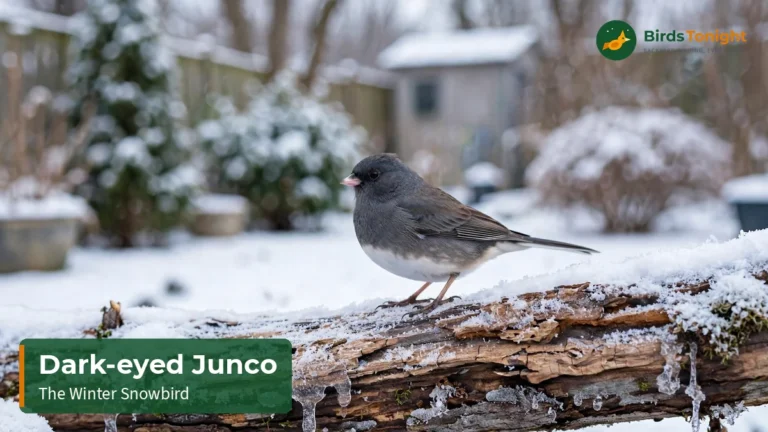
The Dark-eyed Junco spends the winter on the ground under feeders in most of Canada. These gray and white sparrows scratch in the snow for fallen seed and flash white tail feathers when they fly. Our full guide to the Dark-eyed Junco shows how to spot each kind and feed them well.
Northern visitors: the irruption years
Some winters, the north sends guests. Birds that live in the boreal forest fly south in big numbers when the seed crop fails up there. Birders call these years irruptions, and no two are ever the same.

The Common Redpoll is the guest most people hope for. It is a tiny finch with a red cap and a black chin, and it feeds in busy flocks on nyjer and small seeds. In a good redpoll winter, a feeder can hold a dozen of them at once.
Pine Grosbeaks move slow and tame, like big calm finches that forgot to fear people. The males are rosy red and the females are gray with gold heads. They love sunflower seeds and the fruit left on ornamental trees.
Evening Grosbeaks arrive in loud flocks and empty a feeder fast. The males wear bold yellow and black with a huge pale bill built for cracking seeds. One morning the yard is quiet, and the next it is full of their ringing calls.

Bohemian Waxwings sweep in to strip berries from mountain ash and crabapple trees. They are smooth and silky, with a crest, a black mask, and tiny red tips on the wings. A flock can clean a tree in a day and
then vanish for weeks.

Snow Buntings are birds of open country, white as the fields they feed in. They swirl over farmyards and snowy roadsides in restless flocks, picking up spilled grain and weed seeds. On the ground they almost vanish against the snow.
Nobody can promise which of these birds will show up in a given winter. Their trips depend on the cones, seeds, and berries far to the north. That surprise is half the fun, and a full feeder is your best invitation.
How birds survive the deep cold
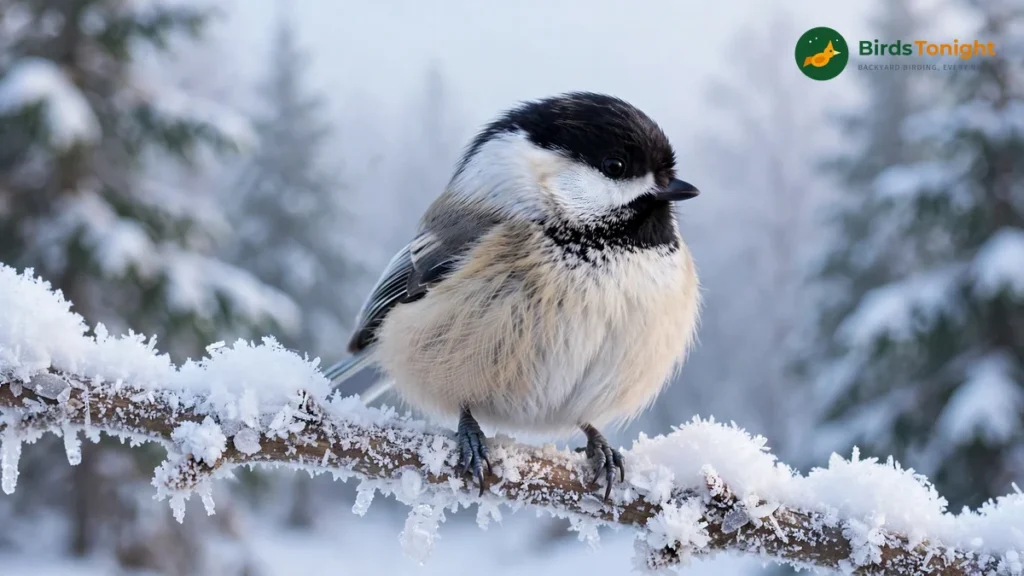
A small bird keeps its body warm the way you keep a house warm, with insulation. Feathers fluffed up trap a layer of still air close to the skin, and that trapped air holds heat in. On the coldest days a
chickadee can look almost round, like a ball of fluff with a beak.
Birds also make heat from the inside by shivering. Their flight muscles tremble in tiny bursts all night long, and that work burns fuel and gives off warmth. It is the same trick your own body uses when you shiver at a cold bus stop.
Fuel means food, and lots of it. Birds feed hard in the last hour of light, filling up before the long night. A bird that goes to sleep hungry may not have enough fuel to shiver until dawn.
Where a bird sleeps matters just as much. Dense evergreens block the wind and hold a pocket of still air around the branches. Woodpeckers sleep in tree holes, and other birds crowd into thick shrubs and sheltered corners at night.
Feeding birds in deep cold
Fat is the food that matters most in deep cold. Suet, peanuts, and black-oil sunflower seeds pack the most energy into every bite. A bird burning fuel all night needs that rich food far more than cheap seed mixes full of filler.

Keep feeders filled during a snowstorm and right after one, not just on calm sunny days. Storms bury the wild seeds birds count on, and the wind makes flying cost more energy. The morning after a storm is when a full feeder can truly save lives.
Clear the snow off tray and platform feeders so birds can reach the seed. A quick brush with a broom after each snowfall keeps the food open. Ground feeders like juncos and doves also need a swept patch where seed stays visible.
Put food out early in the morning if you can. Birds wake up hungry after a night of shivering and look for food at first light. A feeder that is full at dawn is worth far more than one filled at noon.
Water in winter
Food is only half the story, because liquid water is hard to find in a frozen land. Birds melt snow in their beaks and sip from dripping icicles, but both cost time and energy. A bird that finds open water saves strength it can spend on staying warm.

A heated birdbath is safe for birds and draws them in surprising numbers. The heater keeps a small patch of water open, and birds come to drink and even bathe on cold days. Bathing sounds risky, but clean feathers insulate better, and birds know when it is safe to splash.
Never add anything to the water to stop it from freezing. Salt, glycerin, and antifreeze can all harm or kill birds. A simple plug-in heater or a heated bath does the job with plain water alone.
Winter birds by region
The coast of British Columbia plays by softer rules. Winters there are mild and wet, and Anna’s Hummingbirds now stay all year in many coastal towns. A sugar water feeder on a Vancouver porch can hum with life in January.
The Prairies are the coldest stage of all. Farmyards there draw redpolls to spilled grain and Snow Buntings to the open fields around them. Feeders in Winnipeg or Saskatoon earn their keep on the windiest days of the year.
In between, the Great Lakes and the St. Lawrence valley get a mix of both worlds. Cardinals and chickadees hold the feeders, and irruption years bring grosbeaks down from the north woods. Every region has its own winter cast, and all of them are worth watching.
Canada Winter Birds FAQ
Do birds freeze to death in a Canadian winter?
Most healthy birds handle the cold well if they can find food and shelter. Trouble comes when storms bury food for days or when ice coats the trees. That is why a stocked feeder and thick shrubs make a real difference.
What is the best food for birds in deep cold?
Foods rich in fat give the most energy for staying warm. Suet, peanuts, and black-oil sunflower seeds are the top three choices. Skip cheap mixes with a lot of milo and cracked corn, which most small birds leave behind.
Is a heated birdbath safe for birds?
Yes, a heated birdbath made for outdoor use is safe. It keeps water just warm enough to stay liquid, not hot. Birds drink from it and bathe in it, and their feet do not stick to it.
Why do some northern birds show up only in some winters?
These birds follow food, not a calendar. When cones and seeds are scarce in the boreal forest, flocks fly south to look for more. When the northern crop is rich, most of them stay home and southern feeders stay quiet.