
Nest Box Dimensions: The Right Size Box for Each Bird
Put up a wooden box in your yard and a bird may move in within days. But whether the right bird moves in, and whether her chicks stay safe inside, depends on three simple measurements.
The floor size tells the bird how much room her family will have. The hole size decides who can get through the door, and the mounting height keeps the nest out of reach of trouble.
This guide gives the standard nest box dimensions for eight common backyard birds. It also covers the building rules and mounting tips that turn a plain box into a safe home.
Nest box dimensions at a glance
The table below uses the standard sizes published by the Cornell Lab of Ornithology NestWatch program. Bird groups across North America build and monitor boxes to these sizes, and the birds have voted with their wings for years.

All measurements are in inches, except the mounting height, which is in feet. Floor size means the inside floor of the box, so measure wall to wall on the inside, not across the outside.
| Bird | Floor size | Box height | Hole size | Hole above floor | Mounting height |
|---|---|---|---|---|---|
| Eastern Bluebird | 4 by 4 in (5 by 5 also fine) | 8 to 12 in | 1.5 in | 6 to 10 in | 5 to 10 ft |
| Chickadee | 4 by 4 in | 8 to 10 in | 1.125 in | 6 to 8 in | 5 to 15 ft |
| House Wren | 4 by 4 in | 6 to 8 in | 1.125 in | 4 to 6 in | 5 to 10 ft |
| Downy Woodpecker | 4 by 4 in | 8 to 10 in | 1.25 in | 6 to 8 in | 5 to 20 ft |
| Tree Swallow | 5 by 5 in | 6 to 8 in | 1.5 in | 5 to 7 in | 5 to 15 ft |
| Northern Flicker | 7 by 7 in | 16 to 18 in | 2.5 in | 14 to 16 in | 6 to 20 ft |
| American Kestrel and screech-owl | 8 by 8 in | 12 to 15 in | 3 in | 9 to 12 in | 10 to 30 ft |
| Wood Duck | 10 by 10 in | 17 to 24 in | 4 in wide by 3 in tall oval | 12 to 16 in | 10 to 20 ft |
You will notice that most small songbirds share the same 4 by 4 inch floor. What sets their boxes apart is the size of the hole and how far that hole sits above the floor.
Big birds need big boxes, and the jump in size is steep at the bottom of the table. A Wood Duck box is closer to a small cupboard than a bird house, and a kestrel box needs a strong pole to hold it.
Why the entrance hole matters most
Think of the entrance hole as the front door of the house. It is the one measurement that decides which birds can move in and which ones stay locked out.

A hole of 1.5 inches is the classic bluebird size. An Eastern Bluebird slips through it with ease, but a bigger European Starling cannot squeeze its body through, so the bluebirds keep the box.
House Sparrows are the harder problem, because they are small enough to use a bluebird hole. They often push in first, chase the bluebirds away, and claim the box for their own nest.
Since House Sparrows are not a protected native bird, many box owners remove a sparrow nest as soon as it starts. Checking your boxes once a week in spring is enough to stay ahead of them.
Depth works as a lock too. When the hole sits well above the floor, a raccoon that reaches in through the hole cannot touch the nest or the chicks below.
Building rules that keep chicks safe
Build the box from untreated wood, and never use pressure treated lumber or painted boards inside. Cedar, pine and cypress all work well outdoors and are safe for birds.
Make the walls thick, about three quarters of an inch. Thick walls keep the inside cooler on hot afternoons and warmer on cold spring nights.
Drill four small drainage holes in the floor, one near each corner. Rain finds its way into every box sooner or later, and these holes let the water run out so the nest stays dry.
Leave a thin gap between the top of the walls and the roof on two sides. Air moving through those gaps lets heat escape, so the chicks do not overheat on still, sunny days.
Give the box a sloped roof that sticks out a few inches past the front wall. The overhang throws rain away from the entrance hole and throws shade over the front of the box.
Chicks must climb the front wall to reach the hole on the day they leave the nest. Cut shallow grooves across the inside of the front wall below the hole, or use rough, unplaned wood there, so tiny claws can grip.
Make one side of the box open like a door, held shut with a simple latch or a single screw. You will need that door every fall when cleaning time comes.
Skip the outside perch, even though many store bought boxes come with one fitted. Birds that use the box fly straight to the hole and do not need a perch, and a perch only gives a predator a seat while it reaches inside.

Where to mount your box
The safest home for a nest box is a smooth metal pole fitted with a predator baffle. A cone shaped or stovepipe baffle under the box stops raccoons, snakes and cats from climbing up to the nest.
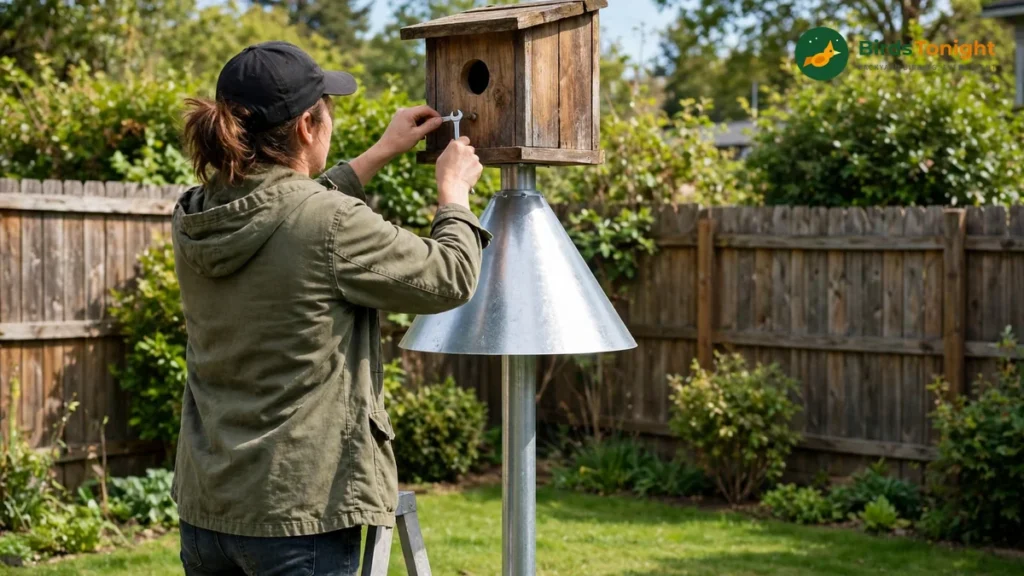
A tree trunk looks natural, but it hands climbing predators a straight road to the box. If you do use a tree or a wooden fence post, the baffle matters even more.
Face the entrance hole away from the wind that brings most of your rain. For much of the country that means facing the hole toward the east or southeast, with the back of the box taking the hard weather.
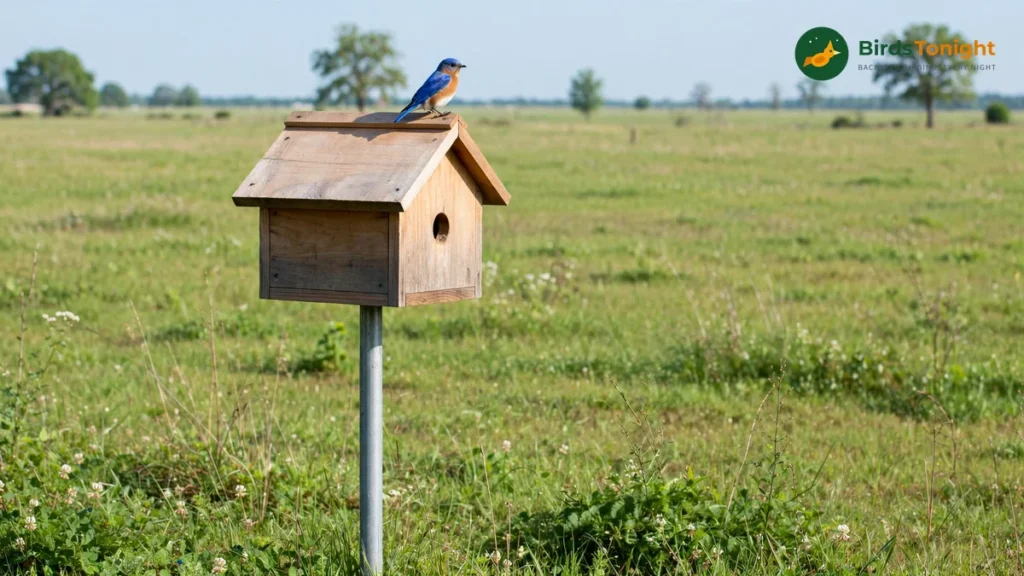
Leave real space between boxes meant for the same kind of bird. Bluebirds guard the ground around their nest, so bluebird boxes stand about 100 yards apart in open country.
One trick that works well is to mount boxes in pairs, about 10 to 15 feet apart. A Tree Swallow often takes one box of the pair, and that lets a bluebird family settle into the other in peace.
Match the spot to the bird you want. Bluebirds and Tree Swallows pick open ground, chickadees like the edge of the woods, and a Wood Duck box belongs close to quiet water.
Clean the box once a year
Once the last chicks have left, which for most birds means some time in fall, open the door and clean the box out. Pull out the old nest and any eggs that never hatched, then brush the inside clean with a stiff brush.
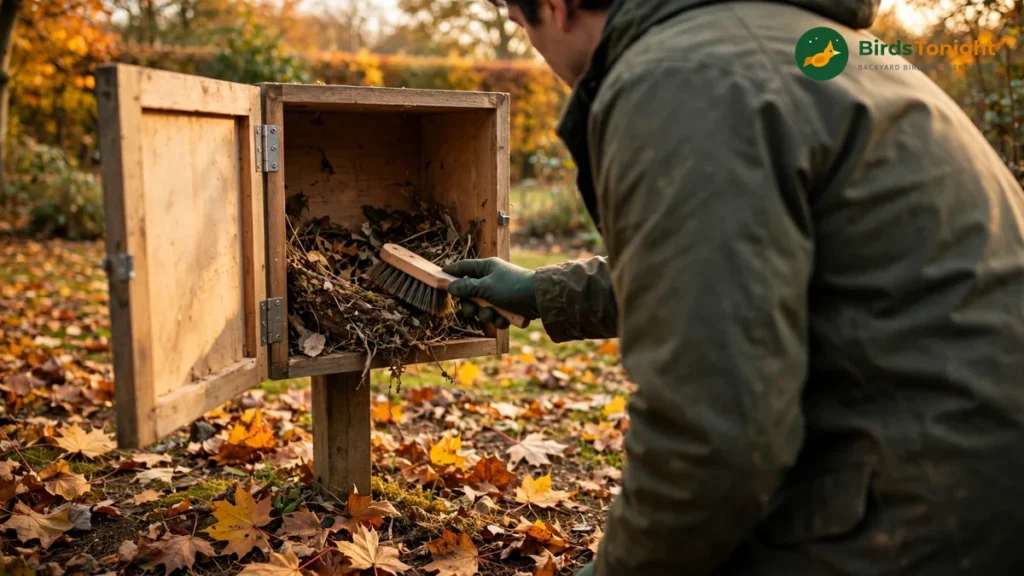
An old nest left in place can carry parasites into the next season. Those tiny pests feed on young chicks, and a fresh start keeps the next family healthy.
A clean box also looks ready to birds that scout for homes in early spring. Many birds check boxes weeks before they build, and a dirty box can put them off.
While the box is open, look over the roof, the drainage holes and the door latch. Ten minutes of work in fall gives a bird family a fresh start in spring.
Some favorite birds never use a box
Not every backyard bird wants four walls and a roof. Robins, orioles and most sparrows build open cup nests in shrubs, trees and hanging baskets instead.
The Northern Cardinal is a good example of an open nester. A pair weaves a loose cup of twigs deep inside a dense shrub, and no box you build will tempt them to move.
So give both kinds of birds a chance in your yard. Boxes serve the birds that nest in holes, and thick shrubs serve the rest.
An empty box does not mean you failed, either. Some birds were simply never going to use one, no matter how well you built it.
Nest box questions, answered
What is the best wood for a nest box?
Cedar is the top pick for most people, because it shrugs off rain and lasts for years without any treatment. Pine and cypress are good too, and all three are safe as long as the wood is untreated.
Can I paint or stain my nest box?
You can paint the outside only, in a light, dull color that blends with the garden. Never paint or stain the inside or the edge of the hole, because chicks grip and chew at the wood there.
When should I put up a new nest box?
Late winter is the best time, a few weeks before birds start to nest in your area. Fall works too, since some birds scout boxes early and may even sleep in one on cold nights.
Why is my nest box still empty?
The most common reasons are a spot that is too busy, a hole size that suits no local bird, or a House Sparrow problem you have not spotted yet. Move the box to a quieter place, check the sizes in the table above, and give it one full season before you judge it.
A good nest box is a simple thing: the right floor, the right hole, and a safe place to hang it. Get those three right and you may be watching a new family grow up in your yard by June.