
Found a Baby Bird? What to Do (and What Not to Do)
You are walking through your yard and you spot a tiny bird on the ground. Your first feeling is worry, and your first wish is to pick it up and help. That kind wish is normal, but the best first step is to stop, breathe, and look closely before you touch anything.
Most baby birds found on the ground do not need to be rescued at all. Many of them are exactly where they should be, with parents nearby watching over them. This guide shows you how to tell the difference, what to do in each case, and when a baby bird truly needs human help.
You do not need special tools or training for most of these small rescues. You only need to know how to read the bird in front of you. The steps below walk you through it, one case at a time.
Nestling or fledgling? How to tell the difference
The most important question is whether the bird is a nestling or a fledgling. These two stages look very different, and each one needs a different response from you. A few seconds of careful looking will tell you which one you have found.

A nestling is a very young bird that still belongs in the nest. It may be pink and bare, or covered in soft fuzz with only a few small feathers starting to show. A nestling cannot hop, walk, or grip a branch, and it will sit helpless where it lands.
A fledgling is an older young bird that has left the nest on purpose. It is fully feathered, it can hop and flutter its wings, and it may make short, clumsy flights from spot to spot. Fledglings spend several days on the ground or in low bushes while they learn to fly well.
During those days on the ground, the parents keep caring for the fledgling. They bring it food, watch it from nearby branches, and call to it through the day. A healthy fledgling is not lost or abandoned, so the kindest thing you can do is leave it alone and keep pets away from it.
If it is a nestling, put it back in the nest
A nestling on the ground is a different story, because it cannot survive outside the nest yet. Look up and around the spot where you found it, since the nest is often in a bush, a low branch, or under the edge of a roof nearby. Many backyard birds build their nests in thick shrubs, and the Northern Cardinal is one of the most common of them.
If you find the nest and it is in good shape, pick the baby up gently with clean hands and place it back inside. Work calmly and quickly, then step away so the parents can return. A warm baby that sits quietly in the nest has the best chance of growing up healthy.
You may have heard that parent birds will reject a baby if a person touches it. That is a myth, and it is not true. Birds have a poor sense of smell, so they cannot tell that you held their baby, and they will keep feeding it once you walk away.
If the nest is gone, make a simple substitute nest
Sometimes the nest has fallen apart, blown down, or cannot be reached at all. In that case, you can build a simple substitute nest in a few minutes. The goal is to give the baby a safe, dry cup close to the place where its parents last fed it.

Take a small basket or a small plastic tub and poke a few drainage holes in the bottom so rain can run out. Line it with dry grass or soft dry leaves, and shape the lining into a snug cup. Skip fresh green grass, because it can turn cold and damp against the baby.
Place the baby bird gently inside the substitute nest. Then fix the basket firmly in the same tree or bush where the old nest was, as close to the old spot as you can manage. A nest that wobbles or tips will not work, so tie it or wedge it in place with care.
Now walk far away and watch from a distance for an hour or two. Parents are shy around people, and they will only come back when the yard is quiet and empty. If you see an adult bird visit the new nest, your rescue worked, and you can leave the rest to them.
When to call a wildlife rehabilitator right away
Some baby birds do need expert help, and fast. A licensed wildlife rehabilitator is a trained person who is allowed to care for wild birds and release them when they are ready. Call one right away if any of the signs in this section match the bird you found.
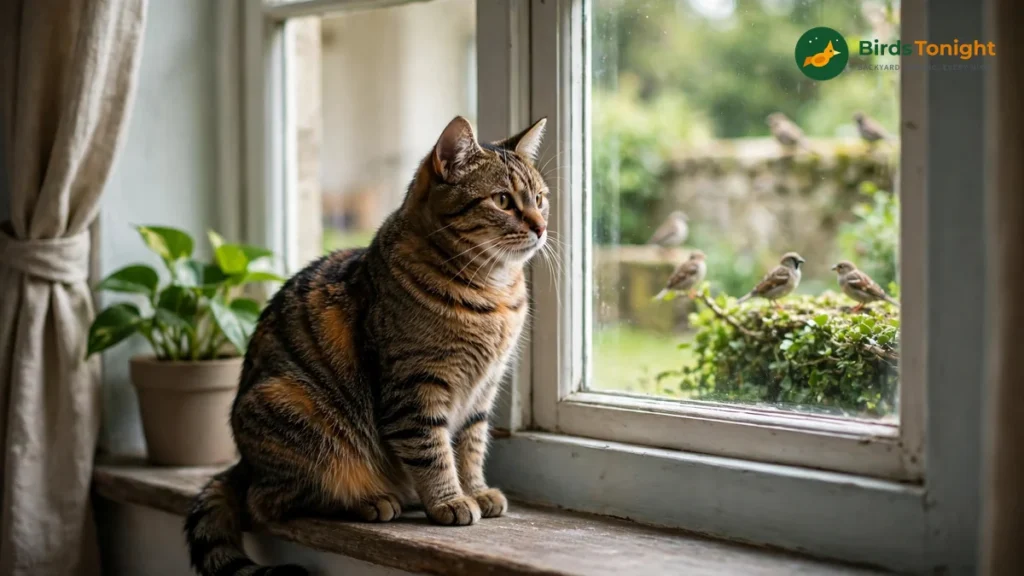
Call at once if the bird is injured or bleeding, or if it holds a wing at a strange angle. Call at once if a cat caught the bird, even if you cannot see a single mark on it. Cat bites and scratches carry germs that can kill a small bird through infection, so a bird caught by a cat always needs medicine and care fast.
Call if the baby feels cold, limp, and weak in your hands, or if it does not react when you come near. Call if flies or ants are crawling over the bird, because that is a sign it is too weak to move them away. Also call if you have watched from far away for several hours and no parent bird has come to feed it.
While you wait for advice, keep the bird in a small box lined with a soft cloth in a warm, dark, quiet place. Do not try to feed it or give it water. Then follow the instructions the rehabilitator gives you, and take the bird to them as soon as you can.

What not to do
The biggest mistake kind people make is trying to feed a baby bird. Baby birds need a very special diet, and the wrong food can make them sick or kill them. Water or milk given by hand can slip into the lungs and drown the bird from the inside, so never put any food or liquid in its mouth.
Do not try to keep the bird as a pet, even for a few days while it grows. Keeping wild birds is illegal in the United States under the Migratory Bird Treaty Act, and only licensed people may care for them. A wild baby also needs to learn wild skills from its parents, and it cannot learn those skills in a cage.
Handle the bird only as much as the rescue truly needs. Every extra minute in human hands adds stress, and stress is hard on a tiny body. Put it back, step away, and let its parents do the job they know best.
Step back and watch from far away
After you put a baby back or set up a substitute nest, your last job is to watch. Go indoors or move well away, and keep children and pets inside too. Give the parents a full hour or two before you decide anything.

Parent birds will not come near the nest while people are close, even kind people who mean well. They wait in the trees until the coast is clear, then slip in fast with food in their beaks. From a window or a far corner of the yard, you may get to see that happy moment yourself.
If the parents return and feed the baby, your work is done and the bird is back where it belongs. If nobody comes after several hours of quiet watching, that is the time to call a rehabilitator for advice. Watching first saves healthy birds from needless trips, and it gets truly needy birds the help they deserve.
Frequently asked questions
Will the parents really take the baby back after I touched it?
Yes, they will. Birds have a weak sense of smell and cannot tell that a person held their chick. As long as you put the baby back in the nest and walk away, the parents will return and keep feeding it.
How long should I wait for the parents to come back?
Wait at least one to two hours while you watch from far away with pets kept inside. Parents visit quietly and quickly, so keep your eyes on the nest itself rather than the whole yard. If several hours pass with no visit at all, call a wildlife rehabilitator for advice.
Can I give the baby just a little water or a worm?
No, please do not give it anything at all. Water can slip into the lungs, and even a worm can be the wrong food for a very young bird of some species. Leave feeding to the parents or to a licensed rehabilitator.
The baby bird is hopping around but cannot fly. Should I bring it inside?
No, that hopping bird is a fledgling learning to fly, and its parents are feeding it on the ground. Keep cats and dogs away, give it space, and watch from far away. It will be flying on its own within a few days.

Finding a baby bird can feel like a big test, but most of the time the answer is simple. Look first, touch only when you must, and trust the parents to finish the job. Your calm few minutes of care can give that small bird its whole life.